Follow us
Products · Products · Products · Products · Products · Products · Products · Products · Products · Products · Products · Products · Products · Products · Products · Products ·
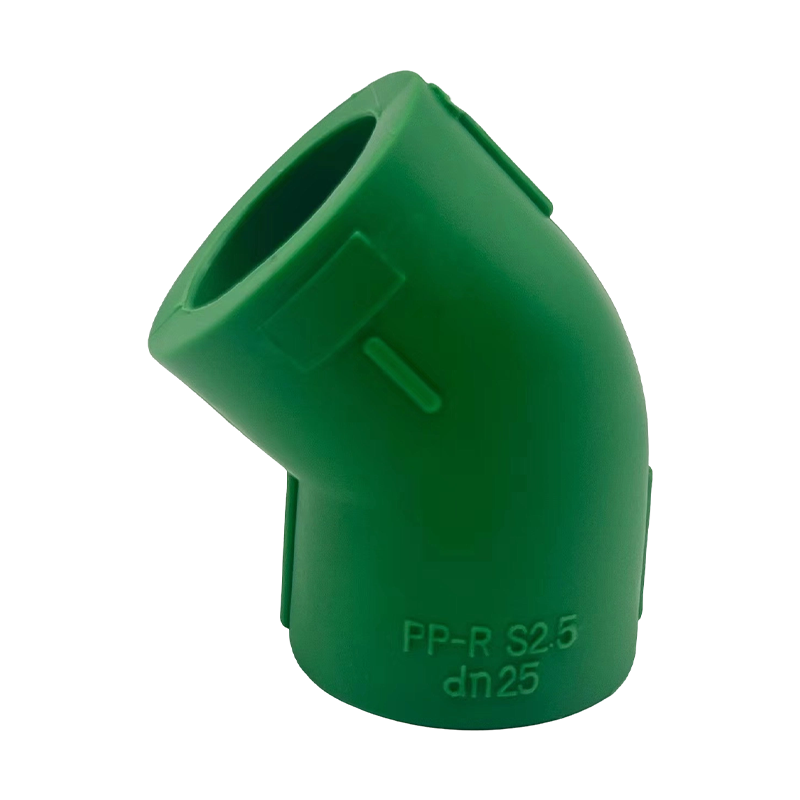
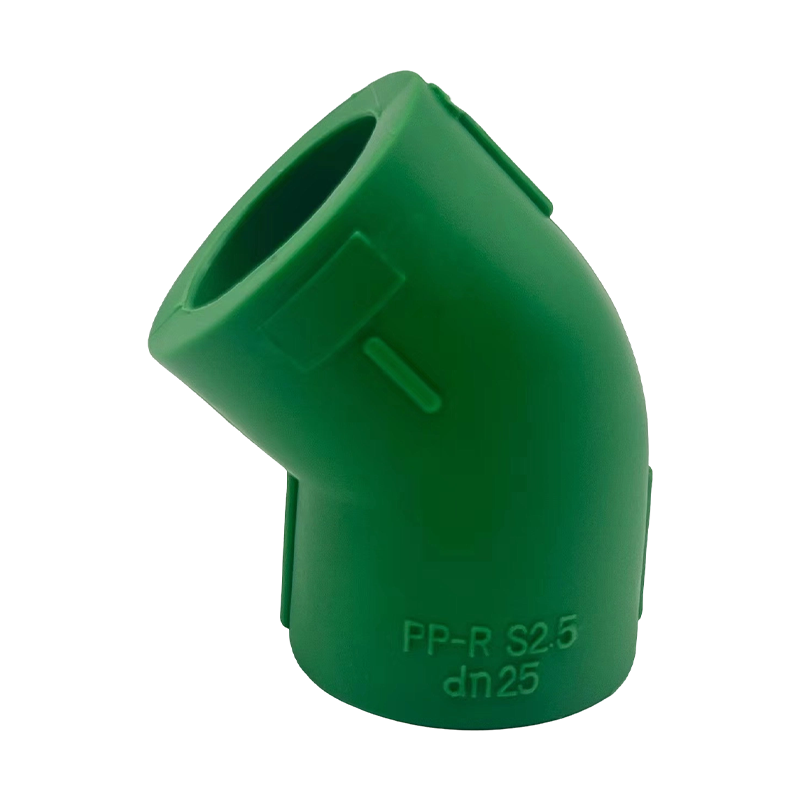
PPR 45 Degree Elbow Pipe Fitting

Home · Products · PPR fittings · PPR Plastic Fittings · PPR 45 Degree Elbow Pipe Fitting

PPR 45 Degree Elbow Pipe Fitting

PPR 45° Elbow Pipe Fitting is intended for situations where a gentler directional turn is preferable to a sharp right angle. By redirecting the pipe run at 45 degrees instead of 90 degrees, this fitting typically allows a somewhat smoother change in flow direction than a right-angle fitting.
Structurally, the 45° elbow follows the same general construction as other fittings in the PPR range: molded from PP-R80/PP-R100 resin and fused to the pipe on both sockets using standard heat-fusion welding. The shallower angle results in a more gradual change in flow direction than a 90° fitting, which can help reduce localized turbulence at the bend.
From an installation standpoint, the 45° elbow is often chosen for layout reasons: two 45° elbows used together can create an offset around an obstacle, and the shallower angle can sometimes fit more conveniently into tight mechanical spaces than a right-angle fitting. This can be useful for installers working in confined ceiling voids, service risers or plant rooms.
The 45° elbow is generally offered in a size and pressure range comparable to the 90° elbow in the same product line; exact specifications should be confirmed with the manufacturer before specifying.

Application Scenarios & Installation

The 45° elbow is specified whenever a plumbing or heating designer wants to minimize pressure loss and turbulence at a directional change, or when the physical layout of a building calls for a gradual offset rather than a sharp corner. It is commonly used in commercial kitchen and hotel plumbing, where equipment connections often require pipes to step around obstacles at a shallow angle rather than a full right turn, and in HVAC condensate and hydronic heating lines, where smoother flow transitions help reduce noise and long-term erosion at the joint.
In sloped or gravity-assisted drainage-adjacent supply lines, and in situations where two pipes run parallel but slightly offset — for example, routing a branch line around a beam or duct before reconnecting to the main path — pairs of 45° elbows are the standard solution, allowing installers to "step" the pipe sideways with minimal added resistance. The fitting is also popular in exposed or semi-exposed piping installations, such as visible mechanical room runs or industrial process lines, where the more gradual angle gives a cleaner, lower-profile appearance than a stack of right-angle turns. Distributors serving contractors in HVAC, commercial plumbing, and industrial piping markets typically stock the 45° elbow alongside the 90° elbow to give installers the flexibility to choose the most efficient routing solution for each specific point in a project.


NAME SIZE Gram weight RMB(UP) PCS/CTN Box gauge
45°ELBOW L20*45° 16 0.192 1000 47*29*40
L25*45° 24 0.288 540 47*29*40
L32*45° 40 0.48 360 47*29*40
L40*45° 60 0.72 165 47*29*40
L50*45° 93 1.116 100 47*29*40
L63*45° 157 1.884 63 47*29*40
L75*45° 315 3.78 45 47*29*40
L90*45° 455 5.46 50 47*29*40
L110*45° 720 8.64 45 47*29*40
L160*45° 1570 23.55 10 47*29*40