Follow us
Products · Products · Products · Products · Products · Products · Products · Products · Products · Products · Products · Products · Products · Products · Products · Products ·
PPR Equal Tee Pipe Fitting

Home · Products · PPR fittings · PPR Plastic Fittings · PPR Equal Tee Pipe Fitting

PPR Equal Tee Pipe Fitting

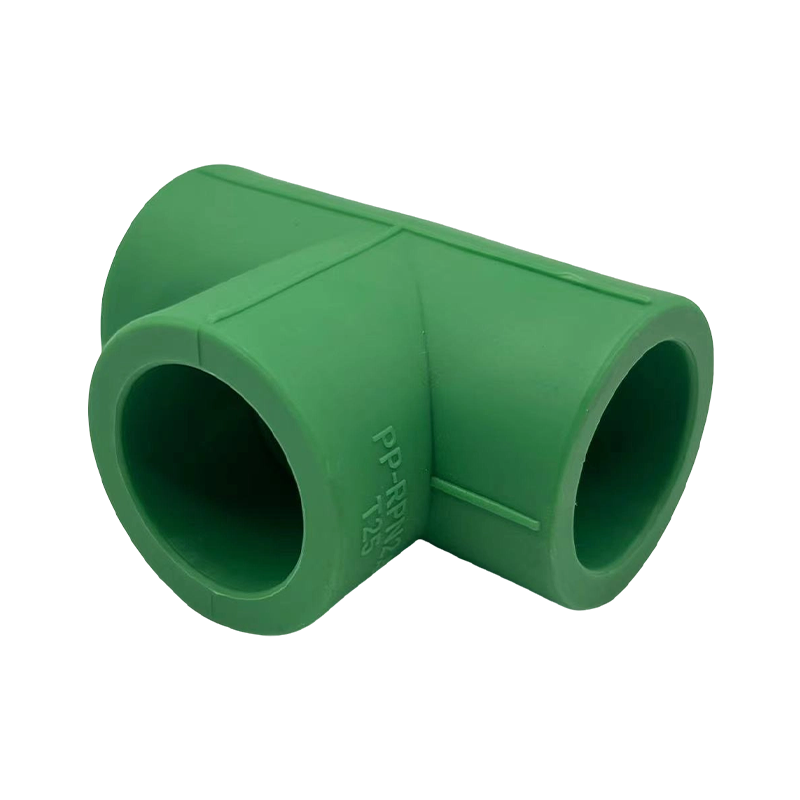
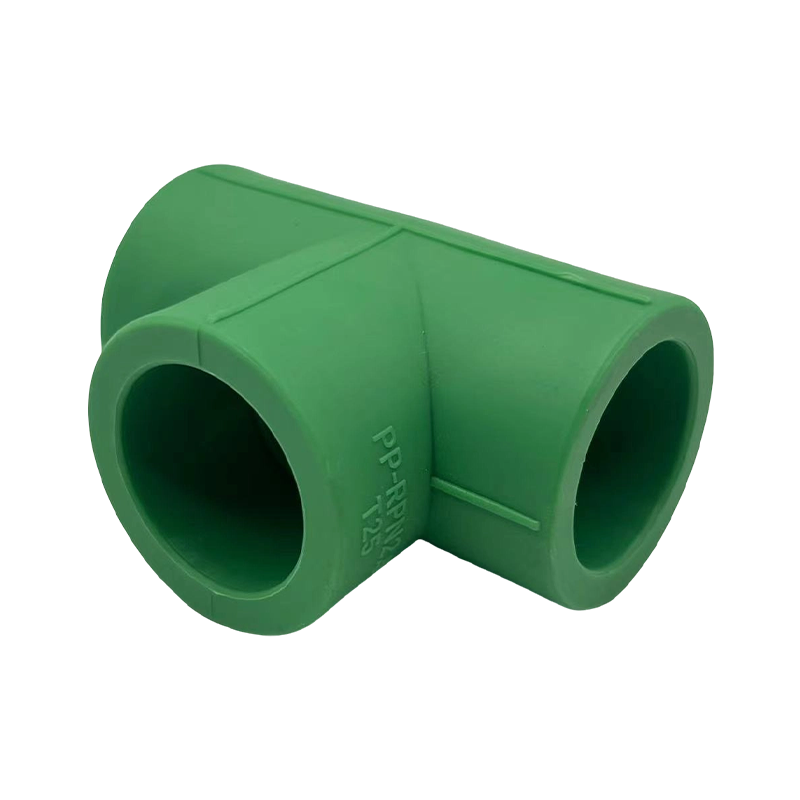
PPR Equal Tee Pipe Fitting is what allows a plumbing system to branch. It splits one pipe run into two supply paths while keeping the main line continuous, whereas an elbow would only redirect a single line. Shaped like the letter "T," it has three sockets of identical diameter: two in line with the main pipe run and one perpendicular branch outlet, fused to the connecting pipes using standard PPR heat-fusion welding.
The tee fitting carries a structural role that a straight coupling or elbow does not: it needs to hold up under pressure across three joints at once, often at a point where flow direction and volume change. Equal tee fittings are generally molded with somewhat thicker wall sections around the branch junction to help the fitting handle this combined load without deforming at the intersection point over time.
Like other fittings in the PPR range, the equal tee is typically produced from PP-R80/PP-R100 resin and forms a fully fused connection with no gaskets, glue, or threads. Its symmetrical design means the branch outlet can be oriented in different directions during installation by rotating the fitting before fusion, giving installers some flexibility in routing the branch line.
Branching is a frequent requirement in most distribution networks, so the equal tee is usually one of the higher-volume items in a PPR fitting line. As with other fittings in this range, the available sizes, pressure ratings, and standards should be confirmed against the current specification sheet.

Application Scenarios & Installation

The equal tee fitting is used at every point in a piping network where a single supply line must feed more than one fixture or downstream branch. In residential bathrooms and kitchens, it is the fitting that splits a main riser to simultaneously feed a sink, a toilet, and a water heater from a shared vertical line. In multi-unit residential and hospitality buildings, tees are placed along horizontal distribution mains on each floor to tap off individual branch lines to each apartment or guest room, allowing a single trunk line to serve an entire wing of a building.
In commercial and institutional projects — schools, hospitals, office buildings — the tee is a core component of manifold-style distribution layouts, where a central mechanical room feeds multiple risers, each of which branches repeatedly via tee fittings to reach every fixture on every floor. The fitting is also widely used in irrigation and greenhouse piping, where a main feed line needs to be tapped at regular intervals to supply individual sprinkler zones or drip lines, and in HVAC hydronic systems where a chilled or heated water loop must branch to serve multiple air-handling units. Because the branch outlet carries the same diameter and pressure rating as the main run, installers can also use the equal tee as a flexible building block for constructing custom manifolds directly from standard fittings, without needing a specialized pre-fabricated manifold part.


NAME SIZE Gram weight RMB(UP) PCS/CTN Box gauge
TEE T20 23 0.276 600 47*29*40
T25 35 0.42 360 47*29*40
T32 53 0.636 250 47*29*40
T40 86 1.032 135 47*29*40
T50 152 1.824 84 47*29*40
T63 256 3.072 48 47*29*40
T75 465 5.58 20 47*29*40
T90 730 8.76 24 47*29*40
T110 1197 14.364 10 47*29*40
T160 2660 39.9 4 47*29*40